

Urbanisation, environmental concerns, the need for investment in future growth and climate resilience, coupled with the ongoing cost of living crisis, have intensified scrutiny of the public water sector in England and Wales.
The debate over whether essential services such as water and sanitation should be privatised has resurfaced, eliciting strong opinions on both sides. This polarisation into definitive “Yes” or “No” positions is part of the problem. The focus tends to be firmly fixed on the present and the short term.
It feels very much like a knee jerk response to a very real and significant problem.
What has Come Before Us
Access to clean water and proper sanitation is a fundamental human right that should be universally available. People have valid concerns on both sides, whether it is the fear of increased costs and reduced access under privatisation or the inefficiencies and lack of innovation within public management.
In my earlier blog on the countdown to AMP 8 (add link), I discussed the privatisation of the water industry in the late 1980s. To fully grasp our current situation, it’s essential to understand the historical context that led us here. In this blog, I will delve deeper into the past, exploring the period before the privatisation of the 1980s.
This journey into the history of public water will help us appreciate the dynamics that shaped the industry. Understanding the roots of our present challenges can inform our approach to addressing them effectively.
This historical perspective will provide a more comprehensive understanding of where we are now and guide us in navigating the future of water management.
The Victorian era is notable for its innovation and global dominance. It should also be no surprise that it was a time when water and sanitation were transformed, marking the birthplace of the ‘sewerage system’.
The Victorians and Bazalgette
During Queen Victoria’s reign, cholera epidemics wreaked havoc, with the deadliest outbreak in 1849 claiming over 14,000 lives in London alone. Throughout her reign, these epidemics resulted in the deaths of tens of thousands across England and Wales.
The turning point came in 1854 when Dr. John Snow made a groundbreaking discovery. He determined that cholera was waterborne and pinpointed a contaminated water pump as the source of the outbreak. This revelation marked a significant advancement in public health.
With rapid population growth due to urbanisation, cesspits frequently overflowed into streets and contaminated the water supply, lavatories and other waste flushed directly into the River Thames.
By 1858, the pollution in the River Thames had reached catastrophic levels, culminating in the event known as ‘The Great Stink’.
This crisis spurred government to finally act.
The Great Stink – during the particularly warm summer of 1858, the smell from the polluted River Thames was so overpowering that MPs had to evacuate their chambers in the Houses of Parliament.
London’s Great Stink – Historic UK
As the Chief Engineer of the Metropolitan Board of Works for London, civil engineer Joseph Bazalgette was finally tasked with addressing the city’s severe sanitation problems.
Bazalgette’s sewer design focused on diverting wastewater away from the city using sewers that carried both stormwater runoff and waste. The first combined sewer system was an interconnected network that redirected all waste away from the River Thames towards new treatment works. This innovative solution significantly reduced the spread of waterborne diseases like cholera and saved countless lives.
It took another 17 years to fully realise Bazalgette’s vision (1858 to 1875). This monumental effort involved building 1,100 miles of street sewers and 82 miles of intercepting sewers. The work also included the construction of major embankments along the River Thames, such as the Victoria, Chelsea, and Albert Embankments. Existing tunnels were lined and repurposed, and some watercourses culverted.
The comprehensive network became the backbone of London’s modern sanitation, marking a pivotal shift in public health infrastructure.

The disruption caused by this massive undertaking would have been significant. Streets were often torn up for extended periods, causing inconvenience to residents and businesses. The construction required the relocation of existing infrastructure and the demolition of buildings in some areas.
Despite these challenges, the scale and ambition of the work underscored the urgent need to address public health crises and modernise the city’s infrastructure. Ultimately, the benefits far outweighed the temporary disruptions, as the new sewer system dramatically improved the quality of life for Londoners and set a precedent for urban sanitation worldwide.
Cities like New York and Paris adopted similar sewer systems to combat waterborne diseases and improve sanitation.
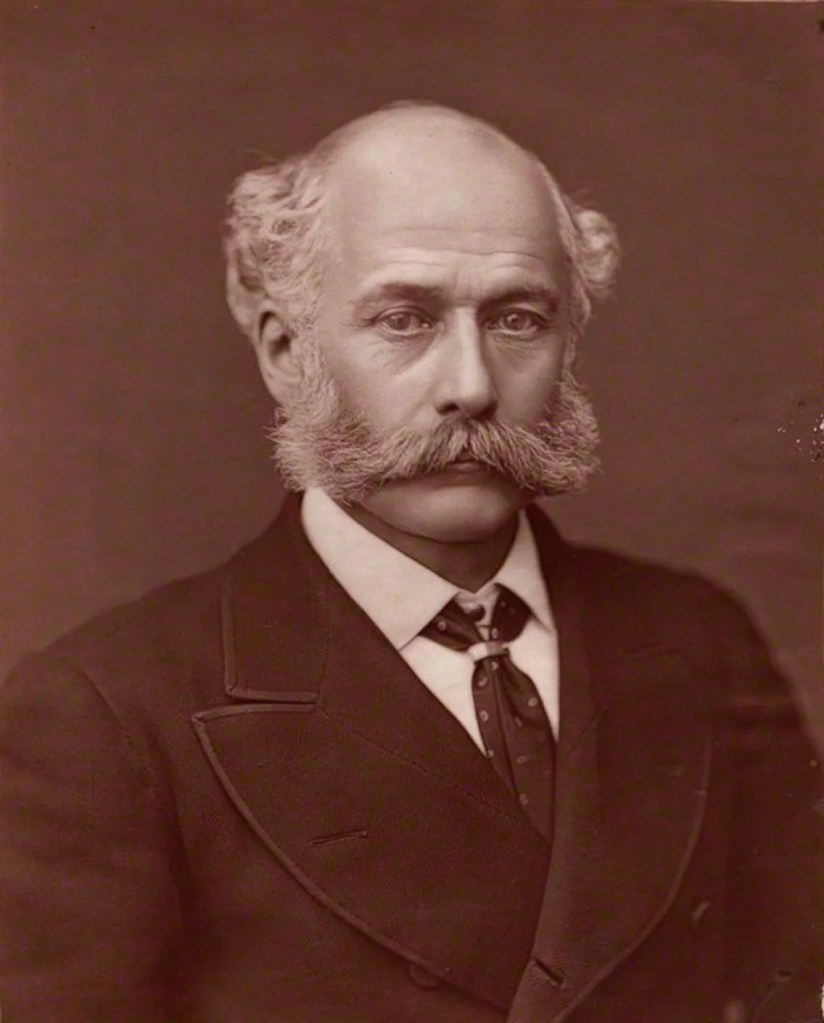
Sir Joseph Bazalgette was knighted in 1875 for his contributions to civil engineering and later became President of the Institution of Civil Engineers in 1883.
Sir Joseph Bazalgette | Institution of Civil Engineers (ICE)
The CSO
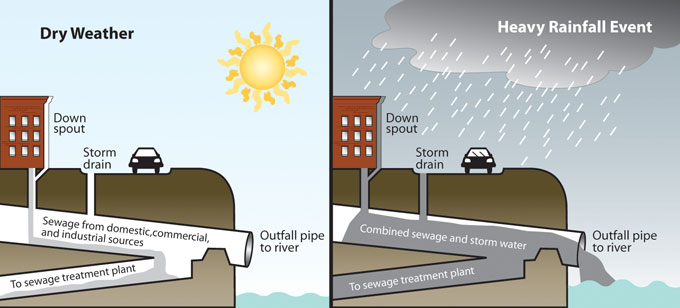
Bazalgette included overflows as a ‘failsafe’ mechanism to prevent flows from backing up and flooding homes during heavy rainfall when the system became overwhelmed. These overflows, known as Combined Sewer Overflows (CSOs), allowed excess flows to escape from the system. When the volume exceeded the sewer system’s capacity, CSOs allowed flows above certain levels (by spilling over weirs), to be discharged directly into River Thames.
150 years on
Today CSOs still offer vital hydraulic relief to combined sewerage systems when they become overwhelmed with surface water runoff, typically during or soon after heavy and/or prolonged rainfall.
CSOs help reduce the risk of flows escaping from the combined sewerage systems upwards into the built environment (homes, businesses, roads and highways etc). In these situations, the sewage is heavily diluted, as the surge of surface water far surpasses the volume of wastewater within the system.
Discharge consents set conditions under which consented CSOs discharge into waterways, these are issued by a permitting body.
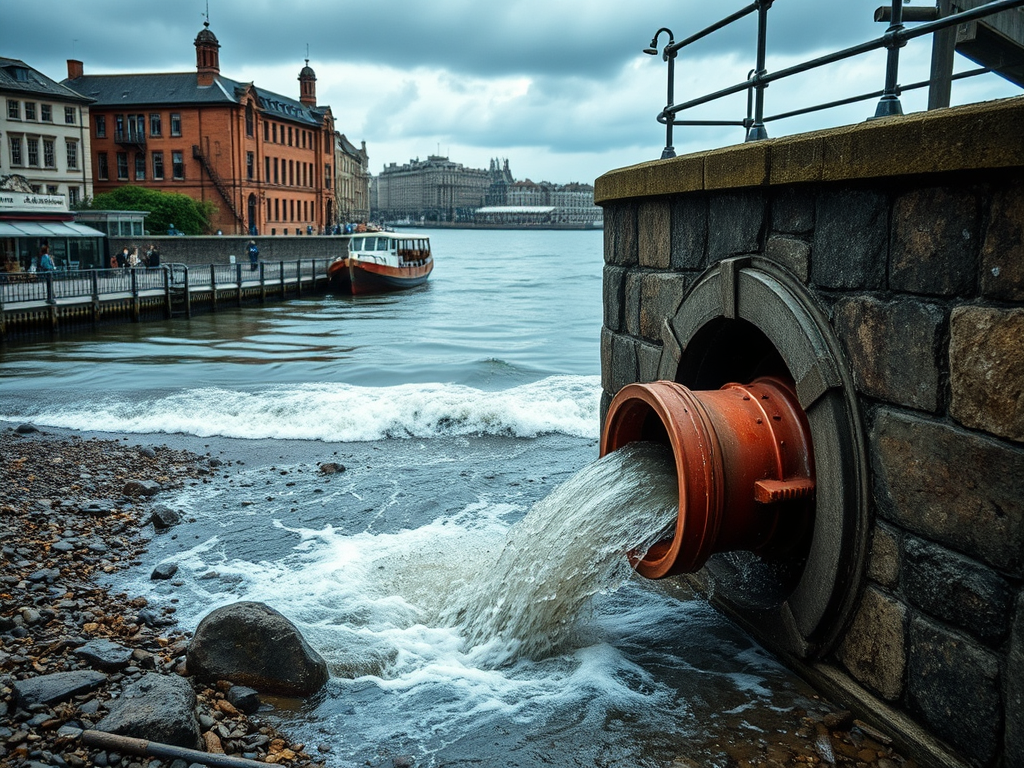
Around 20% of the public sewer system is made up of combined sewers.
We must invest in our sewers. Regardless of their age. | Water UK
Of the separate foul and surface water systems in England and Wales, 30-40% of the surface water drainage still feeds into combined sewers.
Observations from the Victorian Experience
Reflecting on the Victorians’ response to the epidemic reveals some strikingly familiar patterns:
- Dragged-Out Hypothesising: Leaders and experts spent years debating the availability or lack of evidence as the epidemic spread and claimed lives. Interestingly, many of these experts were not directly affected and had not even met those impacted.
- Reluctance to Act without ‘Evidence’: There was a noticeable hesitation to take action without concrete evidence.
- Resistance to Change: Even when the cause of the outbreak was identified, there was resistance to acceptance, and many sought to discredit the findings.
- Lack of Immediate Recognition: The importance and urgency of the matter were not recognised by bureaucrats and decision-makers until much later.
- Delayed Public Awareness: Although the cause was identified in 1854, it took years for public awareness to catch up and for pressure to build, it all came to a head with the Great Stink.
- Government Directive Needed: Meaningful action only happened when the government finally directed it.
- Significant Disruption: The scale of disruption needed to build new infrastructure was significant.
- Time for Overhaul: The extensive time needed to overhaul the systems at the time.
Final Thoughts for Now
Bazalgette’s sewer design was undeniably transformative for its time and for generations to come. However, it is highly unlikely that he could have realistically anticipated the needs of today’s built environment and the impact of modernisation, such as the growth of infrastructure, population, consumption, and waste.
He was asked to address a specific issue for London, and while there were other cities with similar challenges around the world, it is unlikely that these would have factored into his design. The fact that it remains the standard for sewerage systems over 100 years later is mind-blowing, especially considering how much the needs of the built environment have changed and the climate challenges we face today.
Is it time for another transformative and disruptive overhaul?
Food for Thought!
There’s more to come on our trip down memory lane.
Thank you for reading and stay tuned for more.
 meshikiyang.com
Leave a comment